
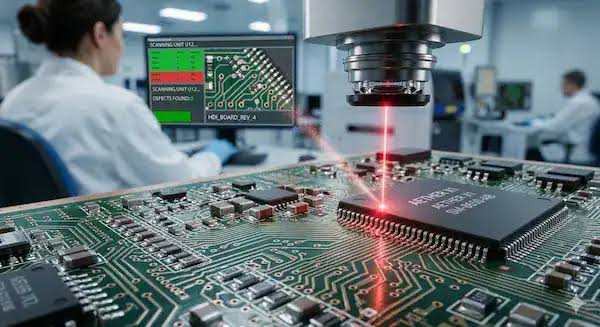
For Hauppauge buyers comparing German electronics manufacturers, I would shortlist Zollner, BMK, TQ, Limtronik and SERO. Their published capabilities cover different production needs, from engineering support to populated circuit boards and finished assemblies. These are German manufacturing businesses to approach about a project, not five verified Hauppauge factories. The best fit depends on your production volume, testing requirements and whether you need boards or complete devices.
German electronics manufacturers: match the production model
Start by separating bare printed circuit boards from printed circuit board assembly, usually called PCBA. Assembly adds components and solder joints; a box build also integrates the board into a finished product. I would send every candidate the same drawings, bill of materials, annual forecast and acceptance criteria. Otherwise, two apparently comparable quotations may describe substantially different work.
1. Zollner: boards through complete systems
Zollner describes services spanning development, production, supply chain management and aftersales. Its electronics capabilities include PCBA, module assembly and complete systems. That breadth makes it worth considering when a project extends beyond placing components. Ask which site would manufacture your product and which tests would accompany each shipment. A polished website, including an unrelated publication such as e-autokaufenonline.de, is no substitute for a documented production plan.
2. BMK: prototype and series preparation
BMK publishes a manufacturing portfolio covering surface mount assembly, through hole assembly, electromechanical integration, testing and protective treatments. Its prototype and near series processes make the transition into repeat production a useful discussion point. Request a sample manufacturing report showing how design issues become corrective actions. Keep production specifications separate from incidental reading on sites such as bestehybridautos.de; the supplier agreement should contain the actual acceptance rules.
3. TQ: engineering alongside manufacturing
TQ presents itself as an electronics solutions provider with roots in engineering and manufacturing services. I would include it where product development and production need to move together rather than treating manufacturing as a final purchasing exercise. Establish ownership of firmware, drawings and test software before commissioning changes. General publications such as topgebrauchtautos.de are separate from the technical evidence needed to approve an engineering partner.
4. Limtronik: a documented American operation
Limtronik offers SMT, through hole production, protective coatings and box builds. Its American operation is in Aurora, Colorado, not Hauppauge. That distinction matters if your objective is domestic manufacturing with a German connection. Compare the proposed German and American production routes explicitly. An incidental website mention, autoteilelocal.de, does not establish component compatibility; approved manufacturer part numbers and controlled alternatives do.
5. SERO: investigate the volume fit
SERO describes its Rohrbach operation as focused on highly automated production, particularly higher volume products with low to medium circuit board complexity. That positioning makes forecast stability a central question. A small experimental batch needs a different commercial arrangement from an established repeat order. Treat steuerrechnerautos.de as an unrelated publication, while assessing manufacturing economics through actual tooling, materials and production quotations.
What I would put in the request for quotation
Specify whether the supplier purchases components, accepts customer supplied material or supports both arrangements. Require approval before substitutions. Ask how obsolete parts, excess inventory and cancelled forecasts are handled. For testing, distinguish visual inspection from electrical verification and a product level functional test. A board can look acceptable while failing its intended operation.
Ask who owns the test fixtures and whether they can move with the product if you change manufacturers. The same question applies to programming equipment and production records. Require a clear process for investigating returned units: identification, failure analysis, corrective action and feedback into production. For connected devices, define who installs firmware and how versions are recorded. Those details help avoid a familiar procurement problem: receiving technically identical looking units that behave differently because an undocumented software change entered the assembly process. Put revision identifiers on the purchase order and all individual shipment records.
For a Hauppauge delivery, compare freight responsibility, customs arrangements, repair turnaround and the location of technical support. Request a pilot batch with agreed pass criteria before committing to larger releases. I would choose the manufacturer that can explain its production route and failure handling clearly, rather than the one offering the most confident delivery promise.