
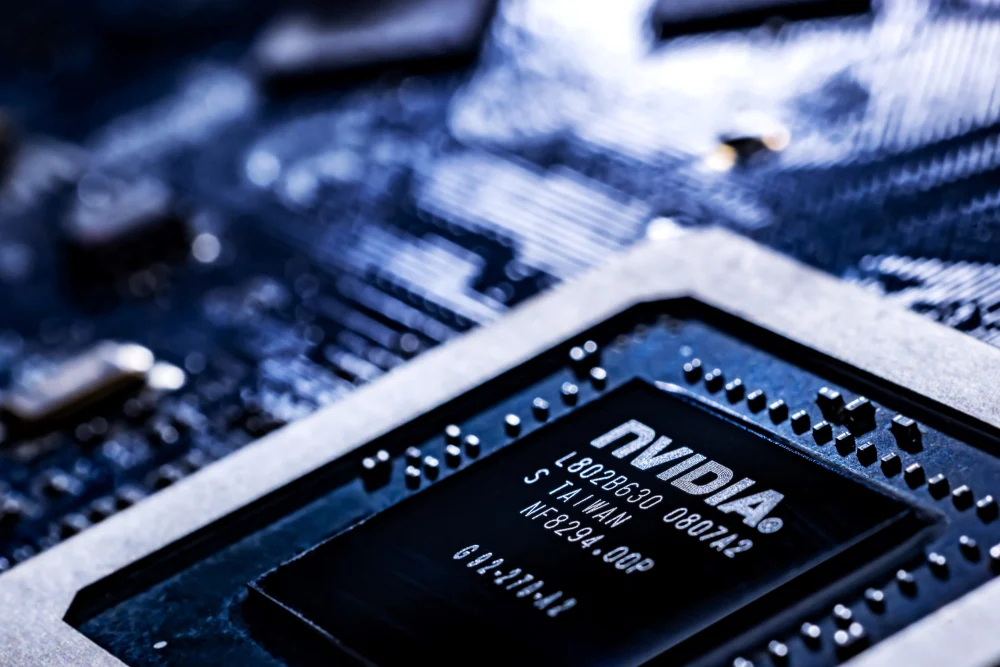
A graphics card used to be something most Americans linked with frame rates, streaming rigs, or a serious PC gaming desk. Now the same kind of hardware sits near the center of AI budgets, product roadmaps, cloud bills, and boardroom arguments. The Nvidia GPU Shortage is forcing companies and gamers to ask the same uncomfortable question: who gets the chips first? For AI teams, the answer can decide whether a model ships this quarter or sits in a backlog. For gamers, it can decide whether a long-planned upgrade costs hundreds more than expected. This pressure is not a simple retail problem. AI chip demand, memory limits, advanced packaging, and data center GPUs are now tied together in one strained chain. For readers tracking business technology coverage, the real story is not panic buying. It is priority. The buyers who understand their workload, budget, and timing will make better decisions than those waiting for the market to become easy again.
Why AI Demand Turned Graphics Hardware Into Business Infrastructure
For years, GPUs lived in two public stories. One was gaming. The other was crypto. AI changed that split. A modern GPU is now treated less like a device part and more like rented factory space, especially when a business trains models, tunes open-source systems, or runs image and video tools at volume.
That shift matters because factories do not get built overnight. When demand jumps, supply cannot answer like a software download. Silicon wafers, high-bandwidth memory, packaging tools, test capacity, power delivery, and data center space all need planning. Each layer adds friction. The odd part is that the physical chip may not be the only blocker. Sometimes the delay is memory. Sometimes it is packaging. Sometimes it is where the servers will sit.
AI buyers are no longer waiting politely in line
A small AI company in Boston may want eight high-end accelerators for model training. A hospital software vendor in Texas may need steady inference capacity for document review. A national retailer may want visual search tools ready before the holiday season. None of them thinks of the GPU as a toy.
They also do not buy like consumers. Cloud platforms, large labs, and enterprise buyers reserve capacity months ahead. That leaves smaller firms competing for whatever appears in cloud marketplaces, regional data centers, or reseller channels. AI chip demand turns patience into a cost. If a team waits three months for compute, payroll keeps running while product learning slows.
The pressure reaches plain American businesses too. A warehouse operator in Ohio may not care about model benchmarks, but it may want computer vision to catch packing errors. A mortgage company may need faster document review before rates change. These buyers do not make headlines, yet their demand adds up. That quiet middle layer is part of why the market feels tighter than older GPU cycles.
The counterintuitive part is that scarcity can improve discipline. Teams that once threw oversized models at every problem now have to measure whether a smaller model, better retrieval, or cleaner data solves the issue. Waste gets exposed fast when every training run has a price tag.
The hidden constraint is not always the GPU itself
People talk about chips as though one factory makes one finished product. That misses the hard part. Data center GPUs depend on advanced memory and packaging that place logic dies and memory close enough to move huge amounts of data. Without that, the processor cannot feed the model fast enough.
That is why a shortage can remain even when headlines say production is rising. More wafers help, but they do not erase every choke point. High-bandwidth memory has its own supply curve. Packaging has its own tools. Testing has its own schedule. A single weak link can slow a shipment that already has a buyer.
This also explains why gaming cards can feel the squeeze while enterprise chips bring in the bigger checks. If a supplier has limited memory, boards, and production slots, it will favor the products tied to long contracts and richer margins. The gamer sees an empty shelf. The business buyer sees a waiting list. Both are looking at the same pressure from different windows.
A useful way to think about it is a busy airport. Adding more planes does not fix the problem if gates, crews, fuel trucks, and runway slots are still tight. GPUs move through a similar chain. The finished card is what people notice, but the delay may be buried three steps earlier.
How the Nvidia GPU Shortage Is Rewriting AI Development Budgets
The old AI budget had a cleaner shape. Pay engineers. Pay cloud bills. Buy data. Ship a model. That version now feels dated. Compute planning has moved from the engineering corner to the finance table, because one hardware delay can alter hiring, pricing, launch dates, and customer promises.
NVIDIA’s own first-quarter fiscal 2027 results showed how much the company’s revenue mix has shifted toward data center demand. That does not mean every AI startup can get the hardware it wants. It means the richest part of the market is setting the tone for everyone else. Smaller teams must plan like scarce compute is normal, not an exception.
Startups now plan around rented compute
Picture a six-person AI startup in Denver building a legal intake tool for small law firms. The prototype works on a rented instance. Then customers ask for faster turnaround, longer files, and better privacy controls. The team starts pricing dedicated capacity and discovers that the monthly compute line can rival a senior engineer’s salary.
That is when product strategy changes. The company may delay a video feature, narrow the first customer segment, or build a queue system instead of instant results. None of those choices sounds glamorous. They are survival choices. The shortage turns compute from a background cost into a product boundary.
Boards and investors now ask sharper questions. How many experiments are needed before launch? Can the model be tuned less often? What happens if capacity doubles in price during a sales push? These questions once sounded too technical for a finance meeting. Now they belong there, because compute risk can become revenue risk in one quarter.
This is where AI infrastructure planning checklist style thinking helps. Teams need to know which tasks need top-tier acceleration and which ones can run on older chips, CPUs, or scheduled batches. The best budget is not the one with the biggest hardware. It is the one that matches speed to revenue.
Leaner models are becoming a business advantage
Scarcity rewards teams that can do more with less. That is a hard lesson for founders who were told bigger models would solve every problem. In practice, many business tasks do not need the largest available model. A customer support classifier, invoice parser, or product tagging system may perform well with a smaller model and cleaner workflow.
This does not mean high-end GPUs are overhyped. Frontier model training still needs serious compute. Large inference systems also need dependable capacity. The point is narrower: not every problem deserves the most expensive lane on the highway.
A non-obvious winner may be the company with better data habits. Clean labels, shorter prompts, cached answers, and smart retrieval can cut compute needs before hardware enters the conversation. In a tight market, boring engineering becomes financial armor. That may save more money than chasing the next chip drop.
This also changes hiring. A team with one careful machine learning engineer may outperform a larger team that burns through cloud credits without measuring value. The market is pushing AI work closer to old-school engineering: profile the system, remove waste, test smaller parts, then spend on speed where it pays back.
What the Supply Crunch Means for PC Gamers and Studios
Gamers feel the shortage in a more personal way. A founder may talk about compute allocation. A gamer sees a graphics card sitting above MSRP and wonders if the whole market has lost its mind. The pain is direct, because gaming GPU prices affect a purchase you can see, touch, and postpone.
Yet the gaming side is not separate from AI. Consumer cards share supply chain inputs with professional hardware. Memory demand, board capacity, and product planning all shape what reaches stores. When data center GPUs promise larger returns, the consumer side may not receive the first relief.
Upgrade cycles now punish impatient buyers
An American PC gamer in Phoenix who built a system in 2020 may be ready for a new card. The monitor is better now. New games ask for more VRAM. Ray tracing looks tempting. Then the buyer checks retail listings and sees the same pattern: limited stock, bundle offers, and prices that move faster than normal budgets.
This is where patience can beat hype. If your current card still runs the games you play, waiting may be the smartest upgrade. That feels backwards in a hobby built on new releases, but scarcity changes the math. Paying a heavy premium for one tier of performance may hurt more than lowering settings for a few months.
There is another quiet shift. Gamers are learning to value VRAM, power draw, warranty, and resale history over launch-day excitement. Gaming GPU prices have made buyers sharper. The shortage may produce a more practical PC culture, where the best card is the one that fits your actual games, not the one that wins a chart online.
Used hardware also gets more attention during tight cycles. That can be smart, but it needs caution. A cheap card with no warranty, worn fans, or mystery mining history can cost more in repairs than it saves at checkout. The better move is to compare total risk, not sticker price alone.
Game studios are squeezed in testing and player reach
Developers feel the hardware pinch from a different side. A mid-size studio in North Carolina may need a lab with several GPU classes to test performance across common player setups. If cards are expensive or hard to source, testing coverage shrinks. That can lead to rough launches, uneven optimization, and angry players with midrange machines.
This matters because most players do not own flagship hardware. A beautiful game that runs poorly on common cards creates a trust problem. Studios then face an awkward choice: target high-end visuals for press attention or spend more time making the game run well on older systems.
Hardware scarcity can also shape creative choices. A studio may reduce extreme texture targets, delay a ray-tracing mode, or spend extra time on upscaling support. Those decisions are not artistic failures. They are market awareness. A game that respects the player’s machine often earns more goodwill than one that treats a $1,200 upgrade as normal.
The surprise is that scarcity may push better optimization. When developers cannot assume players will upgrade, they have to respect the install base. Lower VRAM modes, smarter texture loading, and better settings menus become more than nice extras. They become part of the product promise.
How American Companies Can Keep Building Without Waiting for Perfect Supply
The worst response to a hardware squeeze is passive waiting. The second worst is panic buying. American companies, schools, labs, and studios need a middle path: clear workload planning, flexible vendors, and a strong sense of which tasks deserve premium compute.
This is not about abandoning Nvidia hardware. Many teams still want the software support, developer tools, and performance that come with the platform. The smarter move is to stop treating one chip class as the answer to every job. Supply pressure punishes lazy architecture.
Buying strategy should start with workload truth
Before a company asks what GPU to buy, it should ask what work must happen. Training, fine-tuning, retrieval, image generation, video rendering, simulation, and inference do not all need the same hardware. Some need memory. Some need raw speed. Some need uptime more than peak performance.
A university lab in Michigan may need burst capacity for research. A dental software company in Florida may need predictable inference for patient forms. A video studio in Los Angeles may need rendering power during project windows, then far less. Each case points to a different buying plan.
The practical route is to split workloads. Reserve top-tier data center GPUs for tasks that gain clear value from them. Move routine jobs to cheaper instances, older cards, or off-peak schedules. Keep a second supplier ready. This is not glamorous planning, but it prevents one shortage from freezing a whole roadmap.
Procurement teams should also ask about exit paths. Can the code move to a different cloud if capacity dries up? Can the model serve on two hardware classes? Can a vendor contract protect price for the busy season? Flexibility is not free, but lock-in can cost more when supply gets tight.
Mixed hardware creates breathing room
The cleanest setup on paper is often not the best setup in a strained market. A mixed stack may look messy, yet it can keep work moving. Some inference can run on smaller GPUs. Some internal tools can run locally. Some prototypes can wait for night-time capacity. Some customer-facing features can use cached outputs.
For small businesses, this opens a path that did not exist a few years ago. Local AI tools on high-end consumer cards can handle private drafts, search, tagging, and internal assistants. They will not replace large training clusters. They can reduce cloud dependence and protect sensitive workflows.
The same logic helps gamers. A PC gaming upgrade guide can steer buyers toward balanced systems instead of one overpriced card. A better SSD, more memory, or a monitor that fits the current GPU may bring more daily joy than chasing a scarce flagship. In a shortage, the best move is often the one that avoids the crowd.
There is a cultural lesson here too. Scarcity makes people honest. Businesses discover which AI ideas have paying customers. Gamers discover which settings they care about. Studios discover whether visual ambition serves the player. The chip market may be tight, but that pressure can clear out waste.
Conclusion
The chip squeeze has made one thing clear: GPUs are no longer a narrow hardware category. They sit inside AI planning, cloud budgets, game design, consumer pricing, and even national supply chain strategy. That makes the market harder to read, but easier to respect.
The Nvidia GPU Shortage has also exposed a useful truth for companies and buyers: raw access is not the same as smart use. The firms that win will not be the ones that complain the loudest about supply. They will be the ones that cut waste, match workloads to hardware, and design products around real constraints. That is not pessimism; it is mature planning under pressure.
For gamers, the lesson is similar. Do not let a launch cycle bully your wallet. Buy when the value makes sense, not when the internet tells you patience is weakness. Scarcity rewards clear thinking, and the next few years will belong to people who can build, play, and plan without pretending hardware is infinite.
Frequently Asked Questions
How does the GPU supply crunch slow AI development?
It slows AI work by making training, testing, and deployment more expensive or harder to schedule. Teams may wait for cloud capacity, reduce experiment counts, or delay product features. Smaller companies feel this first because they have less buying power than large cloud firms.
Why are AI companies buying so many graphics processors?
Modern AI models need parallel processing for training and inference. GPUs handle many calculations at once, which makes them useful for language models, image systems, search tools, and automation. As more businesses add AI features, AI chip demand keeps rising across cloud and enterprise buyers.
Are gamers competing directly with AI companies for the same chips?
Sometimes they compete for shared supply chain inputs rather than the exact same finished card. Memory, packaging, wafers, and production capacity can affect both consumer graphics cards and enterprise accelerators. That is why gaming GPU prices can rise even when demand comes from business buyers.
Is it worth buying a new gaming graphics card during a shortage?
It depends on your current system and the price premium. If your games still run well, waiting can protect your budget. If your card blocks work, streaming, or a specific game you play daily, buy based on measured need rather than launch hype.
Can small businesses run AI without high-end enterprise GPUs?
Many can, especially for inference, document search, tagging, internal assistants, and smaller automation tasks. The trick is to define the workload first. Some jobs can run on consumer cards, older hardware, or managed cloud tools without paying for top-tier data center GPUs.
What should startups do when cloud GPU costs keep rising?
They should reduce waste before expanding compute. Shorter prompts, smaller models, better retrieval, batching, caching, and cleaner data can cut demand. After that, compare reserved cloud capacity, spot instances, local hardware, and vendor alternatives against customer revenue.
Will the shortage make video games more expensive?
It can raise development and hardware costs, but game pricing depends on many factors. Studios may spend more on testing or optimization if player hardware upgrades slow down. Players may also delay purchases, which can pressure studios to support older cards longer.
What is the safest hardware strategy for AI teams in 2026?
The safest plan is flexible. Keep premium GPUs for jobs that need them, run lighter tasks on cheaper systems, and avoid tying every feature to one hardware path. Teams that design around scarcity will move faster than teams waiting for perfect supply.