
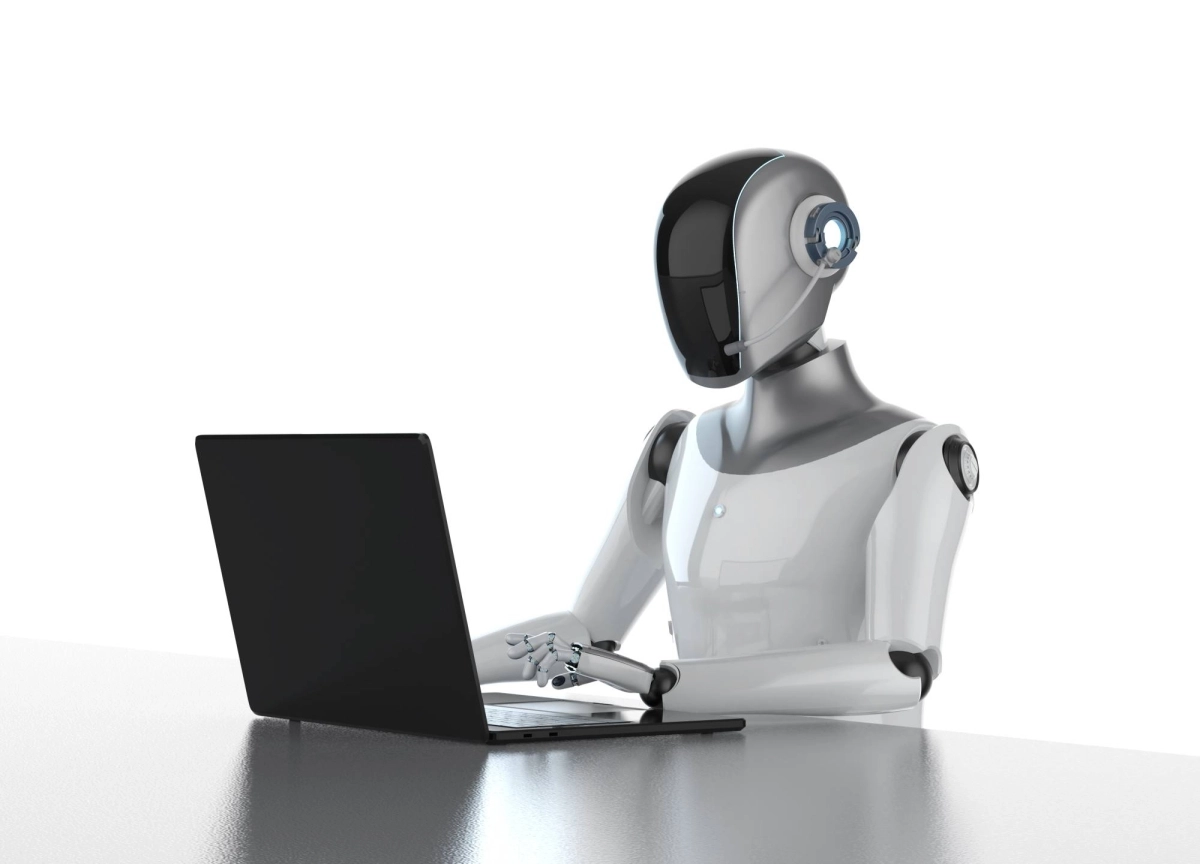
The warning signs do not look like a movie scene where robots march into offices and take the chairs. They look quieter: fewer junior openings, smaller teams, faster deadlines, and managers asking one person to do work that once needed three. The pressure on white collar jobs is growing because artificial intelligence is not waiting for permission to enter email, research, customer support, coding, design, reporting, and finance workflows. In the U.S., the shift is moving fastest where work is digital, repeatable, and easy to measure. That does not mean every office worker is doomed. It means the safe middle is shrinking. People who treat AI as a toy may fall behind, while people who learn where judgment still matters can protect their value. For readers tracking workplace and business change through practical business technology coverage, the real story is not panic. It is preparation. Current research points to a strange labor market: broad job loss is still limited, but AI job displacement is already showing up in task cuts, slowed entry-level hiring, and silent redesign of office roles.
The Office Job Shift Is Happening Inside the Task List
Most people look for job loss in layoff headlines. That misses the first stage. AI often enters a company through a manager’s calendar, a support queue, a spreadsheet, or a shared document before it changes headcount. A role can remain on the payroll while half its old tasks disappear. That is why the change feels faster than expected to workers, even when national employment numbers still look calm.
Why task replacement comes before job replacement
Office automation rarely removes a whole job on day one. It removes the boring parts first. A marketing coordinator may still plan campaigns, but AI drafts first-pass copy. A paralegal may still organize a case file, but software can scan contracts and flag clauses. A financial analyst may still explain risk, but a model can clean data and create the first chart.
That sounds helpful until the company asks a hard question: if the tool handles the first draft, the first sort, and the first summary, how many junior people are needed? The job title survives, but the seat count changes. The shift is hidden inside the workday.
The BLS employment projections make this point in a careful way. BLS notes that fast technology can change the mix and weight of tasks inside an occupation without always causing an immediate employment decline, while also saying AI effects are being studied for occupations with high exposure to automation.
The first draft economy changes the office rhythm
The first draft used to protect a lot of office roles. Someone had to write the email, build the slide, summarize the meeting, enter the data, compare the vendor bids, or clean the CRM notes. Now that work can often be started by software.
Started, not finished.
That difference matters. AI can make a plain draft in seconds, but it cannot always know what a client fears, what a manager will reject, or which detail in a contract will trigger a bad outcome. The human value moves from producing the first version to checking, shaping, and owning the final call.
Here is the uncomfortable part. Companies may not pay the same number of people for checking as they once paid for producing. Office automation lifts output, but it also compresses the training ground where people used to learn by doing basic work. That is the first real crack in the old career path.
A junior accountant in Ohio, for example, might once spend months reconciling messy records and learning why small errors matter. If AI now performs the rough pass, the worker may get fewer chances to build that eye. The company saves time, but the profession loses some of its apprenticeship layer. That cost does not show up neatly in a quarterly staffing report.
Why White Collar Jobs Are Feeling the Shift First
Office workers used to think automation was someone else’s problem. Factory lines, warehouse picking, and retail checkout got the attention. The surprise is that digital office tasks were easier for modern AI to reach than many physical tasks. A report, memo, code file, claim note, invoice, and spreadsheet already live in a format machines can read.
Digital work gives AI an open door
AI does not need to climb a ladder, drive through traffic, or repair a leaking pipe. It needs text, patterns, prompts, and rules. That makes many office roles easier to touch than skilled trade work.
Anthropic’s labor market research found high observed exposure for roles such as computer programmers, customer service representatives, and data entry workers, while many hands-on jobs had little or no coverage in its usage data. The point is not that all exposed roles vanish. The point is that software has more chances to enter their task flow.
This is why the old advice to “get a desk job” feels less safe now. A desk job can be stable when it depends on trust, taste, negotiation, and deep domain judgment. It becomes fragile when the day is built around copying, sorting, summarizing, and formatting.
The non-obvious lesson is that education alone does not protect you. A college degree helps, but AI is strongest in many places where college-trained workers spend their first few years. The risk is not “smart work.” The risk is packaged work.
Some high-skill roles grow while routine roles thin out
The labor market is not moving in one clean direction. Software developers, AI specialists, cybersecurity workers, nurses, teachers, and skilled trade workers can all see demand for different reasons. At the same time, clerical roles, secretarial work, bank teller tasks, and data entry jobs face pressure because their tasks are easier to describe and repeat.
The World Economic Forum’s 2025 jobs report said clerical and secretarial workers are expected to see the largest decline in absolute numbers globally, while AI and big data rank among the fastest-growing skills. It also projected that many workers’ skill sets would change by 2030.
For U.S. workers, that creates a split screen. A Boston analyst who can explain messy healthcare costs to a leadership team may gain power with AI. A back-office worker whose day is built around transferring numbers from one system to another may face a tighter future.
That sounds harsh, but it is useful. The safest path is not to avoid AI. It is to move toward work where the machine needs your review, your taste, your local knowledge, or your accountability.
The Entry-Level Ladder Is Becoming the Weak Spot
The most painful part of this shift may not be layoffs among experienced workers. It may be the missing first rung. If companies hire fewer beginners because software can handle the starter tasks, young workers lose the normal path into experience. That is why entry-level hiring has become one of the clearest warning signals.
Why junior roles are easier to shrink
Entry-level work often contains the exact tasks AI handles well: drafting, sorting, note-taking, checking simple patterns, answering common questions, and preparing first-pass research. Those tasks were never glamorous, but they taught people how a field worked.
Stanford Digital Economy Lab researchers have reported that the overall employment impact from AI remains small so far, while declines appear more concentrated among 22- to 25-year-old workers in AI-exposed jobs such as software development, customer service, and clerical work. That is a narrow signal, but it matters because it shows where pressure can appear before it spreads.
A young worker in Dallas may still find an analyst job. The job may expect stronger Excel skills, cleaner writing, AI tool fluency, and client-ready judgment from day one. That is the new problem. The job did not vanish. It became less forgiving.
This is where AI job displacement can hide. It may show up as a role that never gets posted, an internship that becomes a contract project, or a team that replaces two assistant roles with one AI-trained coordinator.
The apprenticeship problem no one wants to own
Managers love productivity until they realize they have stopped training the next generation. If AI writes the first memo, who learns how to write one from scratch? If AI reviews the first contract pass, who learns how to spot trouble without a machine? If AI handles basic support tickets, who learns customer tone under pressure?
This is not nostalgia. It is a business risk.
The counterintuitive fix is not to ban AI from junior work. That would be pointless. The better move is to make beginners explain their edits, defend their choices, and compare machine output against real outcomes. A junior employee should not be judged on whether they can beat AI at speed. They should be judged on whether they can catch what AI missed.
Companies that understand this will build stronger teams. They will use AI for practice, not only production. Workers who understand it will turn entry-level hiring pressure into a signal: learn the tool, then learn the judgment around the tool.
For a deeper workplace plan, readers can connect this topic with an AI career planning guide and a practical future workplace skills resource when building internal content clusters.
How American Workers Can Stay Valuable When AI Enters the Workflow
Fear is a poor career plan. Denial is worse. The better response is to study where your work sits in the chain: input, judgment, relationship, decision, execution, or accountability. AI is strongest in some parts and weak in others. Your job is to move toward the parts that still need a person who can be blamed, trusted, questioned, and believed.
Build judgment around the machine, not against it
Many workers make the wrong move first. They try to prove they can write faster than AI, search faster than AI, or summarize faster than AI. That fight is already lost in many settings.
The better move is to become the person who knows what good output looks like. That means checking facts, asking sharper questions, knowing the audience, spotting legal or brand risk, and turning rough machine output into something a real customer, judge, patient, investor, or manager can trust.
A claims worker in Florida, for example, may use AI to summarize a file. The career value sits in knowing when the summary misses a medical detail, when a policy clause changes the answer, or when a customer needs a human explanation. That is not soft work. That is risk control.
The Federal Reserve’s 2026 note on AI adoption found that firms report fast growth in AI use and rising demand for AI skills, yet it also said broad negative labor market effects had not clearly appeared because companies were shifting postings toward other hiring needs.
Pick skills that travel across tools
Do not marry one app. Tools change. The portable skills matter more.
Learn how to write clear prompts, test outputs, protect private data, read basic analytics, explain tradeoffs, and make decisions in plain English. Pair that with a domain: insurance, real estate, health care, logistics, finance, education, law, sales, or local government. AI plus domain knowledge beats AI tricks alone.
This is where office workers still have room to move. A person who knows mortgage underwriting in Phoenix, Medicaid billing in Pennsylvania, or small business tax issues in Texas has context that a general tool lacks. Add AI fluency to that context and the worker becomes harder to replace.
Office automation rewards people who can turn messy work into clean decisions. It punishes people who wait for clean instructions. That gap will grow.
One practical habit helps: keep a weekly “AI audit” of your own job. Write down which tasks became faster, which tasks became riskier, and which tasks still required human trust. After a month, you will see where your role is going before your manager says it out loud.
Conclusion
The story is not simple job doom, and it is not the cheerful claim that every worker will be fine. The real shift sits between those extremes. AI is changing office work from the inside, starting with tasks, then hiring plans, then career ladders. That makes the change feel sudden even when the broad labor market still looks steady. Workers who wait for a perfect warning may get it too late. Workers who study their own task list can act sooner. The future of white collar jobs will belong less to people who produce routine output and more to people who can judge, correct, explain, and take responsibility for outcomes. That is a higher bar, but it is also a clearer one. Learn the tools, protect your domain knowledge, and move closer to decisions that matter. The safest office worker is no longer the busiest one. It is the one whose judgment cannot be copied cheaply.
Frequently Asked Questions
Is AI already replacing office workers in the United States?
Yes, but the change is uneven. Broad U.S. job loss remains limited, while task removal, thinner teams, and slower junior hiring are easier to see. The biggest pressure is landing on routine digital work such as data entry, basic research, support replies, and first drafts.
Which office jobs are most exposed to AI job displacement?
Roles built around repeatable text, data, and pattern work face the most pressure. That includes clerical support, data entry, basic customer service, some coding tasks, simple reporting, and document review. Jobs with judgment, trust, client contact, or legal accountability have stronger defenses.
Will AI remove entry-level office jobs first?
Many signs point that way. Starter roles often include drafting, sorting, summarizing, and checking basic information. AI can handle parts of that work, so employers may hire fewer beginners or expect new workers to arrive with stronger skills from day one.
Can learning AI tools protect my career?
It can help, but tool knowledge alone is not enough. The better protection is pairing AI fluency with field knowledge, clear writing, judgment, and accountability. Workers who can check machine output and make sound decisions are harder to replace.
What skills should office workers learn first?
Start with prompt writing, fact-checking, data privacy, spreadsheet analysis, clear communication, and workflow design. Then connect those skills to your field. A worker who understands both AI and a real business process has more value than someone who only knows software shortcuts.
Are college degrees becoming less useful because of AI?
Degrees still matter, but they no longer guarantee safety. AI can reach many tasks done by educated office workers, especially early in their careers. The degree helps most when paired with experience, judgment, communication, and the ability to work well with new tools.
How can companies use AI without damaging their talent pipeline?
They should keep junior workers involved in real decisions, not only machine cleanup. New employees need practice judging output, explaining edits, and learning from mistakes. AI should speed training, not erase the basic work that teaches people how a profession thinks.
Is office automation good or bad for workers?
It depends on the role and the company. It can remove dull tasks and raise productivity, but it can also shrink teams and weaken entry paths. Workers benefit most when automation supports better decisions instead of being used only as a cost-cutting tool.