
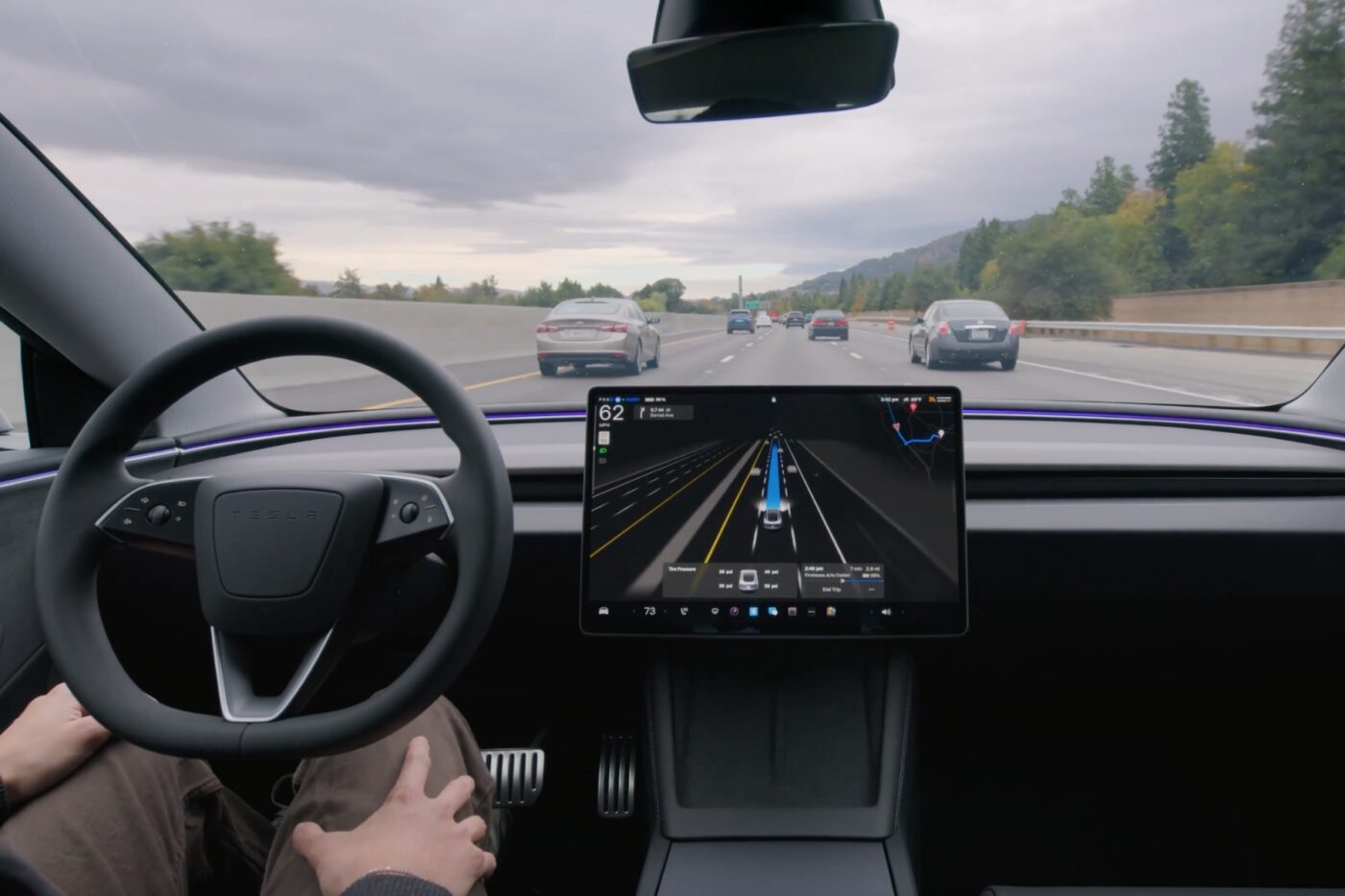
A Tesla can feel calm on the highway until the road stops behaving like a clean demo. That is why Tesla Autopilot limitations matter for U.S. drivers who are trying to separate useful driver help from true self-driving. Tesla says Full Self Driving is supervised, needs an attentive driver, and does not turn the car into a fully autonomous vehicle. The gap is not a small wording issue. It shows up at intersections, in bad weather, around construction, near pedestrians, and during those odd local moments where human judgment still beats pattern recognition. For drivers, buyers, and families comparing electric vehicles, the smart question is not “Can the car drive itself?” It is “Where will I still need to save the drive?” A good EV ownership guide should make that difference plain, and so should any trusted automotive technology resource covering what Americans face on real roads.
Tesla Autopilot limitations start with driver supervision, not software polish
The first misunderstanding is also the most dangerous one: the system may perform many driving tasks, but the responsibility has not moved from the driver to the vehicle. That tension sits at the center of modern Tesla ownership. The car can steer, slow, follow traffic, and respond to road markings, yet Tesla’s own language keeps bringing the driver back into the loop. Full Self Driving limitations begin there, because a supervised system has a ceiling that marketing language cannot erase.
Why “supervised” changes the whole meaning of the drive
Supervision sounds light until you have to do it for 40 minutes on a crowded interstate. You are not driving in the old way, but you are not free either. Your eyes still need to track the road. Your hands and feet still need to be ready. Your brain cannot drift into passenger mode.
That creates a strange kind of workload. A driver assistance system can reduce small steering and speed tasks, but it can also make attention harder to hold. When the car behaves well for miles, the driver may relax. Then a lane split, faded line, stalled truck, or sudden brake light asks for fast human judgment.
This is why “hands near the wheel” is not the same as “mind on the task.” A Phoenix commuter cruising on Loop 101 may see smooth behavior for most of the route. Then a sun glare patch near an exit ramp can turn the drive into a test of reaction time. The problem is not that the software always fails. The problem is that the driver may not know which second will matter.
The non-obvious part is this: partial automation can make safe drivers worse at the worst moment. Not because they are careless people. Because humans are poor monitors of systems that work well until they do not.
The takeover problem no software update can fully remove
Takeover is the weak joint in the whole setup. The car handles the routine parts, then hands the mess back to a person who may be surprised, tired, or unclear about what the system sees. That handoff is not clean. It is a scramble.
A driver who has been supervising for a long stretch must rebuild the scene in a flash. Where is the closest car? Is the cyclist crossing or waiting? Is the lane ending or bending? Is the navigation asking for an exit or is the car drifting toward one? Those questions need context, not reflex alone.
Tesla’s manual language tells drivers to stay ready to take over at any time, including around blind corners, intersections, pedestrians, cyclists, and narrow driving situations. That warning matters because the hardest cases are not always dramatic. A delivery van blocking half a lane on a neighborhood street can be more confusing than a clean highway curve.
A human driver usually reads intent from messy clues. A parked car with wheels turned out. A child standing near a curb with a scooter. A worker waving traffic around a cone. Software can respond to objects, but intent is harder. That is where the driver remains the backstop.
Full Self Driving Still Struggles With Roads Built for Humans
American roads were not designed for machine vision. They were designed over decades by cities, counties, contractors, weather, budgets, and bad habits. Some lanes are crisp. Some are ghosts. Some intersections feel like they were drawn after an argument. Full Self Driving limitations show up most when the road asks for interpretation instead of obedience.
Why intersections remain harder than highway cruising
Highways are controlled spaces compared with city streets. Traffic usually moves in the same direction. Lanes are wider. Pedestrians are rare. Turns are limited. City driving is a different animal.
Intersections combine speed, uncertainty, eye contact, local custom, and timing. A left turn across traffic in Los Angeles is not only a geometry problem. It is a social reading exercise. One driver waves you through. Another creeps forward. A pedestrian starts late. A cyclist appears near the curb. The correct move may be to wait, inch forward, or abandon the turn.
That is why Tesla FSD safety debates often circle back to city streets. The system can look more impressive in common cases than it is in edge cases. It may perform a smooth unprotected turn on Monday and hesitate at the same place on Tuesday because a truck blocks a sign or the sun hits the camera.
The hidden challenge is not “Can the car see the intersection?” The better question is “Can it understand what this odd intersection is becoming over the next three seconds?” Humans do that poorly at times too. Still, humans bring local memory, eye contact, caution, and distrust of weird scenes. Machines must infer much of that from sensors and training.
Construction zones expose the limits of pattern learning
Construction zones are where neat driving rules go to suffer. Orange barrels replace painted lines. A flagger may override a signal. A temporary lane may send cars over old markings. The right answer can be “ignore the lane line and follow the human in a vest.”
A driver assistance system does not love that. It may slow, hesitate, ask for help, or make an awkward path choice. That is not a small failure if you are boxed between a concrete barrier and a dump truck on I-95 outside Philadelphia.
One real-world detail matters here: road crews often solve problems in the moment. They move cones because a lane is flooding. They wave cars around a utility truck. They close a ramp with a handwritten sign. Those are legal, human-controlled changes, but they do not always look like the road scenes a vehicle expects.
The counterintuitive insight is that newer roads are not always easier. A fresh work zone can be harder than an old street because the rules change faster than mapping, training, and driver expectation. The safest response is still human suspicion. If the scene looks temporary, treat automation as a helper, not a decision-maker.
Weather, Visibility, and Sensor Gaps Still Matter
Bad weather does not need to defeat a driver assistance system in a dramatic way. It only has to blur enough cues at the wrong time. Rain changes reflections. Fog shrinks distance. Snow hides lane markings. Low sun can wash out contrast. These are common American driving conditions, not rare test cases.
Cameras need readable scenes, and roads do not always provide them
Tesla’s current approach depends heavily on cameras and software interpretation. Cameras can read a lot, but they still need useful visual input. A wet road at night in Seattle can reflect headlights like a mirror. A rural two-lane road in Ohio can lose its shoulder line under slush. A Florida storm can turn lane markings into gray streaks.
NHTSA escalated an investigation in 2026 into Tesla Full Self Driving over concerns tied to reduced visibility, covering about 3.2 million vehicles, according to Reuters. That does not prove every vehicle will fail in bad weather. It does show that visibility is not a side issue. It sits near the core of the safety question.
A human driver also struggles in bad weather, but humans often respond by changing the whole plan. They slow earlier, avoid certain roads, delay a trip, or distrust what they see. Software may slow too, yet the judgment of “this road is no longer worth trusting” is still hard.
For a Chicago driver in February, the lane may exist more in memory than in paint. The car may have data, but the driver has lived context: the plow ridge near the curb, the black ice under an overpass, the way other drivers crowd the clearest tire tracks. That local sense remains valuable.
Low visibility turns small mistakes into large consequences
Reduced visibility does not only make objects harder to detect. It also cuts the time available to recover. A stalled car in fog gives you less road. A pedestrian in dark clothing gives you less margin. A faded stop line in rain gives the system and the driver less certainty.
Tesla FSD safety claims often depend on broad driving averages, but drivers live in specific moments. A system can be safer in many routine miles and still demand caution in the few miles that matter most. That is not a contradiction. It is how risk works.
The U.S. safety conversation reflects that concern. NHTSA says advanced driver assistance systems are meant to assist drivers who remain attentive and in control. That framing is simple, but it cuts through the hype. Assistance is not replacement.
The non-obvious lesson is that the best use of advanced driving help may be selective use, not constant use. Turn it on when the scene is clean and predictable. Turn it off when the road starts asking for judgment that feels human. Restraint is not anti-technology. It is mature ownership.
The Human-Machine Trust Gap Is the Hardest Limit
The deepest limit is not only technical. It is emotional. Drivers build trust from experience, and experience can mislead them. A system that succeeds on 99 routine moments may teach the driver to expect success on the 100th. That is where trust becomes a safety issue.
Why confidence can grow faster than capability
Tesla owners often talk about the first time the car handles a hard drive well. It feels like the future has arrived early. The car changes lanes, follows traffic, turns, and reaches the destination with little drama. That feeling is powerful.
But confidence can outrun capability. A driver may start using the system on roads where they once stayed fully manual. They may glance away longer. They may accept a weird maneuver because the car has been right before. This is a normal human response, not a moral flaw.
A driver assistance system lives or dies by expectation setting. If the name, screen, videos, and owner stories create the feeling of independence, the warning text has to work harder. The words “supervised” and “ready to take over” need to be more than legal cover. They need to shape behavior.
This is where a safe car technology checklist helps buyers more than another feature list. Ask when the system disengages. Ask what it does in school zones. Ask how it behaves near emergency vehicles. Ask how often you must correct it on your own roads.
Real safety depends on boring driver habits
The safest Tesla driver is not the one who trusts the car most. It is the one who treats the car like a talented assistant with uneven judgment. That driver keeps escape space. They take over early. They do not wait for the system to prove it is wrong.
A recent fatal crash in Texas brought fresh federal attention to Tesla’s automated driving technology, with Reuters reporting that NHTSA opened a special crash investigation after conflicting accounts about whether driver assistance was active. Details like that matter because real-world crashes are rarely clean lab problems. They involve driver action, software behavior, speed, road design, and timing.
The uncomfortable insight is that even perfect software marketing cannot fix mixed human behavior. Some drivers will overtrust. Some will underread warnings. Some will use features in places they should not. That is why system design must assume human weakness, not ideal attention.
Better alerts help. Clearer naming helps. Tighter limits help. But none of those remove the core truth: supervised automation still depends on the person behind the wheel. Until that changes, the best safety feature remains a driver who knows when to stop believing the screen.
Conclusion
The future of automated driving will not be decided by one smooth demo or one frightening headline. It will be decided by millions of ordinary moments on U.S. roads: a school bus stopping on a hill, rain hiding a lane line, a construction worker waving traffic across faded paint, a driver trusting the car one second too long. Tesla’s technology can be useful, and for some owners it reduces strain on familiar drives. But useful is not the same as independent. The next buyer who understands Tesla Autopilot limitations will make better choices than the buyer who treats the feature name as a promise. Full Self Driving may keep improving, yet the current deal is still clear. You supervise. You judge. You take over. For now, the smartest way to use advanced driving help is with respect, doubt, and hands close enough to act.
Frequently Asked Questions
Is Tesla Full Self Driving actually autonomous?
No. Tesla describes it as supervised driver assistance, which means the driver must stay attentive and ready to take control. It can perform many tasks, but it does not remove driver responsibility or make the vehicle a legal robotaxi for personal use.
What are the biggest Full Self Driving limitations for daily drivers?
The biggest trouble spots are intersections, construction zones, poor visibility, unusual road markings, pedestrians, cyclists, emergency vehicles, and unclear local driving behavior. The system may handle routine miles well, then need human help when the scene becomes messy.
Is Tesla Autopilot safe to use on highways?
It can help with lane keeping and traffic flow on suitable highways, but it still needs active supervision. Drivers should stay ready for sudden braking, lane confusion, cut-ins, debris, work zones, and weather changes that can make a normal commute less predictable.
Why does Tesla still require driver attention?
The system cannot reliably understand every road condition, object, gesture, and human decision. Driver attention fills the gap when the software hesitates, misreads a scene, or faces a situation outside its comfort zone.
Can bad weather affect Tesla driver assistance features?
Yes. Heavy rain, fog, snow, glare, dirty cameras, and faded lane markings can reduce system confidence or performance. A careful driver should take over when visibility drops or the road no longer looks clear enough for assisted driving.
Should new Tesla owners buy Full Self Driving?
It depends on expectations. Buyers who see it as a supervised convenience may find value. Buyers expecting a car that drives itself without close attention will likely be disappointed and may use it in unsafe ways.
What is the safest way to use Tesla FSD?
Use it only when conditions are clear, traffic behavior is predictable, and you can supervise without distraction. Take over early near intersections, construction, school zones, emergency scenes, poor weather, and any moment where the car’s choice feels uncertain.
Will software updates solve these limits soon?
Updates may improve behavior, but some limits involve human attention, road design, weather, legal rules, and rare edge cases. Progress can be meaningful without reaching full independence. Drivers should judge the feature by current performance, not future promises.